

A treasury team that has just instructed a cross-border payment and is waiting for confirmation understands intuitively that something about the process is slow. What is less understood is precisely where the time goes. The answer matters because vague dissatisfaction with "correspondent banking being slow" leads to vague solutions, while understanding the specific delay mechanisms points toward specific mitigants. This piece walks through the structural causes of correspondent bank latency and what each one means for treasury operations.
The Chain Structure of Correspondent Banking
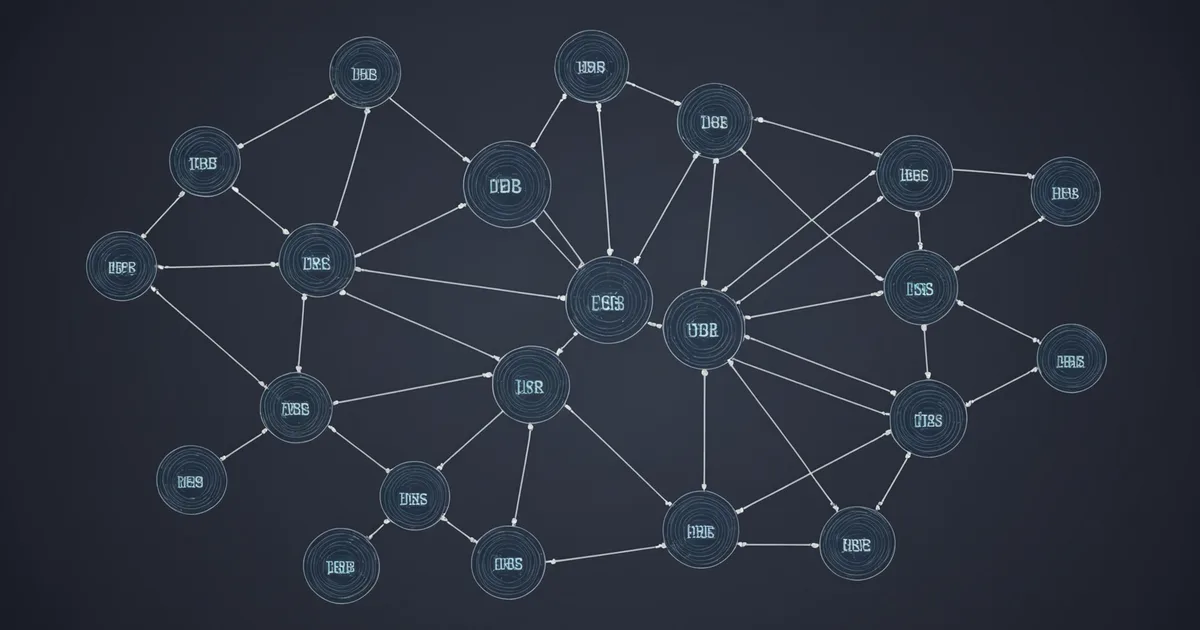
Cross-border payments typically do not move directly from the originating bank to the beneficiary bank. Unless the two banks have a direct bilateral relationship, the payment routes through one or more intermediary correspondent banks that do have the necessary accounts and relationships. A payment from a mid-sized U.S. company to a supplier in Thailand might route through the originating U.S. bank, a U.S. dollar clearing bank, a regional correspondent with Asian relationships, and finally the Thai beneficiary bank. Each institution in that chain is a separate processing step.
The correspondent chain is not visible to the corporate treasury team in real time in most standard payment flows. The originating bank forwards the payment and does not necessarily know in advance which specific correspondents will be selected by the downstream routing logic. That routing is determined dynamically based on bilateral agreements, nostro balance availability, and correspondent network topology at the moment of processing. The corporate instructs the payment; the bank decides the route.
Cut-Off Times and Their Cascading Effect
Every bank in the correspondent chain has processing cut-off times. These are the deadlines after which an incoming payment instruction is queued for the next processing cycle rather than processed in the current day. Cut-off times vary by currency, by transaction type, and by institution. They are often not published publicly and may differ from the times disclosed to the originating corporate.
When a payment misses a cut-off, it does not move. It sits in queue until the next processing window, which may be the following business day. In a chain with three intermediary correspondents, missing the cut-off at any one of them cascades the entire remaining chain by one day. A payment that misses the first correspondent's cut-off by 30 minutes may not reach the beneficiary bank until two business days later than the treasury team expected.
This cut-off sensitivity is a major source of the variance in payment timing that treasury teams experience but cannot easily diagnose. The payment did not encounter a compliance hold or a technical failure. It simply arrived at a correspondent 30 minutes after the correspondent stopped processing for the day. The notification of this, if it comes at all, may not reach the originating bank until the following morning.
Compliance Screening Holds
Each correspondent bank screens incoming payments against sanctions lists and, depending on the jurisdiction and the transaction profile, applies additional AML or KYC checks. The screening process is automated in most cases, but flagged transactions enter a manual review queue. Manual review queues at correspondent banks are staffed during business hours in the correspondent's local time zone, which may not align with the originating treasury team's business hours.
A payment flagged for manual review at a Hong Kong correspondent at 4 PM local time on a Friday will not be reviewed until Monday morning in Hong Kong. For a treasury team in New York, that is a payment that went into a queue Friday morning New York time and will not move until Sunday evening New York time at the earliest. The treasury team may not learn that the payment is in a compliance hold at all until they initiate a manual correspondent inquiry, which takes additional time and adds further uncertainty.
The frequency of compliance holds varies by corridor and by payment profile. Payments involving certain jurisdictions, certain counterparty name patterns, or certain originator details are statistically more likely to trigger manual review. For a treasury team running regular payments in corridors with elevated compliance screening rates, this is a predictable drag on payment timing that should be reflected in treasury settlement expectations, but rarely is because the data to quantify it is not available from standard correspondent bank reporting.
Nostro Balance Constraints
Correspondent banks maintain pre-funded nostro balances in destination currencies to enable payment crediting. When a correspondent's nostro balance in a particular currency is depleted or low, payments may be queued until the balance is replenished through a separate funding cycle. From the originating treasury team's perspective, this appears as an unexplained delay in processing. The gpi tracker, if the payment is gpi-enabled, will show the payment as received at the correspondent but not yet forwarded.
Nostro balance constraints are more common in less-traded currency corridors and at end-of-week or end-of-month periods when payment volumes spike and balances are drawn down faster than replenishment cycles refill them. The constrained correspondent is not broken. It is simply out of the destination currency it needs to credit the beneficiary, and it is waiting for its own funding to replenish. The originating corporate has no visibility into this condition and no direct means of addressing it.
Manual Investigation Requests
When a payment does not arrive as expected, the treasury team's recourse is to contact their bank and request an investigation. The investigation process involves the originating bank querying the correspondent chain using the payment reference. Each correspondent in the chain must be queried separately if the issue cannot be localized from the first inquiry. Correspondent bank response times to investigation requests are typically 24 to 48 hours per institution, and there is no standardized SLA that compels a faster response.
A payment that is three days past expected and whose beneficiary is contacting the treasury team for status may require three separate correspondent bank inquiries before the point of failure is identified. Each inquiry introduces a full business day of waiting, and the investigation process runs in parallel with the payment itself, which may have continued moving during the investigation. Treasury teams at growing companies that process significant payment volume describe correspondent investigation queues as one of their largest operational time sinks, and the time cost lands predominantly on the most experienced members of the team who know how to navigate correspondent relationships.
The Information Gap as the Core Problem
The day-loss problem in correspondent banking is not purely a speed problem. Fast corridors exist: major currency pairs between developed market financial centres can settle same-day under normal conditions. The deeper problem is that when delays occur, the information available to the treasury team is insufficient to distinguish between a delay that will resolve itself in hours and one that requires action. That information gap forces treasury teams to either accept a systematic uncertainty buffer in their operational timing or invest significant manual effort in real-time status tracking.
The Birch Hill approach starts with making the information gap itself the thing to close. Every payment leg generates a real-time status event. When a leg does not produce a confirmation within its expected window, the system flags it automatically rather than waiting for the treasury team to notice through a manual reconciliation process. That changes the operational model from "wait and investigate" to "get alerted to the specific leg that needs attention." We are not claiming this eliminates correspondent bank delays. It changes the position of the treasury team from passive waiter to active responder with precise information about where the problem is.